Safe Height Management
Lowers tree height and removes branch interference with roofs, solar panels, and powerlines.
Safe canopy reduction and height control solutions that keep Park Avenue properties protected without destroying tree health.
Serving homeowners and businesses across Park Avenue, Berserker, and Kawana.
Homeowners often search for Tree Lopping Park Avenue when a tree has outgrown its space, threatens overhead power, or blocks light. We deliver correct canopy reduction techniques that achieve your clearance goals safely.
Many post-war properties in Park Avenue have large shade trees planted too close to houses and overhead power lines. Indiscriminate lopping leads to severe rot in Rockhampton's humid climate, which is why we apply professional reduction techniques to keep trees safe and strong.
Lowers tree height and removes branch interference with roofs, solar panels, and powerlines.
Avoids the repeated cycle of hazardous fast regrowth and expensive repeat pruning caused by topping.
Your trees retain an attractive, natural canopy profile rather than unsightly decapitated stumps.
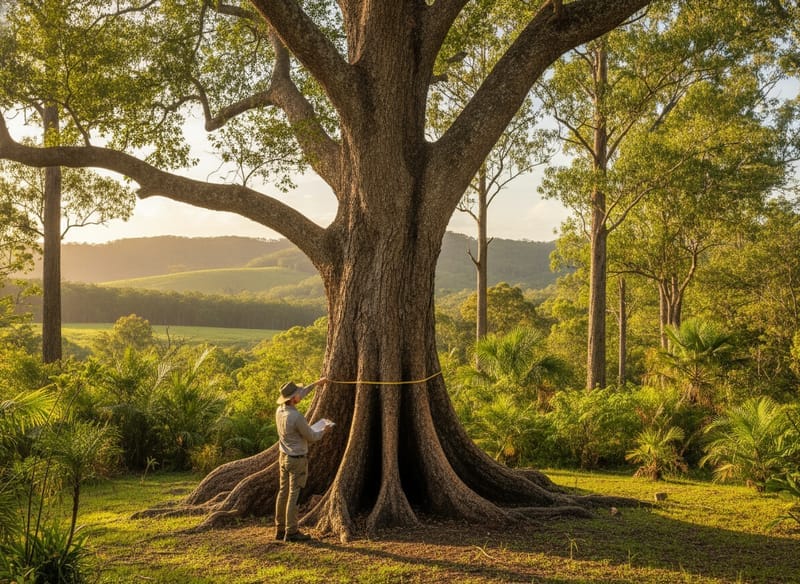
We inspect your tree's current height, growth habit, species response, and proximity to assets.
We outline the best reduction approach to achieve clearance while preserving tree stability.
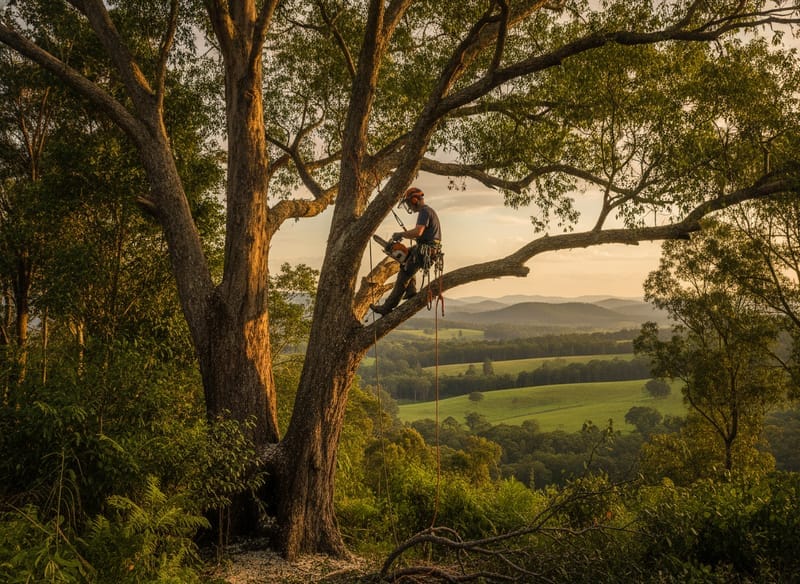
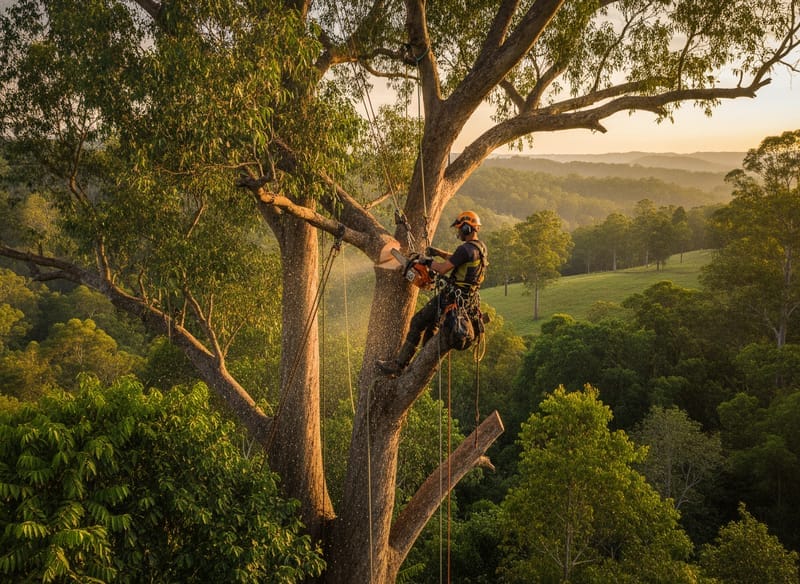
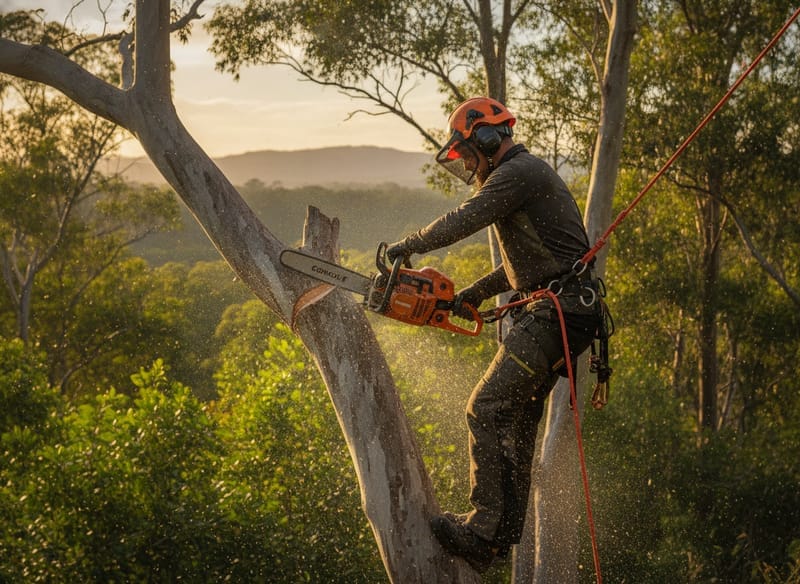
Our climbers access the upper crown, cutting back to appropriate natural forks and lowering heavy wood.
All offcuts are mulched through our chipper and the grounds are left completely tidy.
As an established local team, we regularly handle calls for Tree Lopping Park Avenue and surrounding Rockhampton suburbs. Park Avenue is well known for its older, established post-war blocks, overhead power lines, and mature shade trees that thrive in our dry tropical climate. When the wet season approaches and the summer storms begin to build across the Berserker Range, managing the height, weight, and spread of these large trees becomes a critical priority for homeowners, property managers, and builders across the Fitzroy flood plain.
While many residents use the term 'lopping' when they want a tree made smaller or cut back from their roofline, true horticultural lopping (indiscriminate topping) can actually harm your trees and create hazardous, unpredictable regrowth. Instead, our qualified arborists assess your specific goals—whether it is clearing heavy branches from gutters, lifting the canopy over a new driveway, or managing storm-damaged limbs. We then apply proper, standards-compliant pruning techniques to achieve the size reduction you need, ensuring we do not compromise the tree's health, structural integrity, or stability during the next major weather event.
One of the most common and dangerous issues our climbers see across Rockhampton is the aftermath of poor, under-qualified tree lopping. Indiscriminate topping cuts—where a tree's main trunk or major structural limbs are simply hacked off at a random height—leave large, exposed stubs. These stubs are highly susceptible to decay, rot, and disease, particularly in our hot, humid wet seasons when fungal pathogens thrive. Worse still, the tree responds to this trauma by rapidly pushing out dense epicormic shoots. This new growth is weakly attached to the outer bark rather than the solid heartwood, meaning these fast-growing branches are significantly more likely to snap and fall during a severe thunderstorm or summer downburst. Our professional approach solves this exact problem by aligning strictly with AS4373 (Pruning of Amenity Trees). When you engage us to reduce a tree's size, we perform targeted crown reduction, canopy thinning, or selective pruning rather than harmful lopping. We make clean, precise cuts at the branch collar or back to an appropriate lateral branch that can sustain the tree's growth. This promotes proper natural healing, minimises the risk of internal decay, and creates a much stronger, safer canopy structure. For heavy, sprawling canopy trees like a Moreton Bay Fig or an overgrown Mango tree in your backyard, this means you get the clearance and height reduction you need, while ensuring the tree remains a safe, attractive, and long-lasting asset on your property rather than a future hazard waiting to fail.
When a customer requests size reduction, our qualified team evaluates the site and selects the correct AS4373-compliant method to achieve the desired outcome safely and effectively.
Reducing the overall height and spread of the canopy by selectively cutting branches back to a suitable growth point. This is the correct, standard-approved alternative to indiscriminate topping, ideal for managing oversized, heavy-limbed trees in tight Park Avenue residential backyards without causing stress or dieback.
Removing the lower branches to provide essential clearance for pedestrians, vehicles, driveways, and buildings. This technique effectively raises the canopy base, improving line of sight and access, without compromising the upper structure or balance of the tree.
Selectively removing secondary and tertiary branches throughout the canopy to increase light penetration and air movement. This significantly reduces the wind resistance and sail-area of dense species like African Mahogany during Rockhampton's intense summer storms, preventing whole-tree failure.
Targeting specific, problematic branches—such as those rubbing against roofs, extending over property boundaries, or interfering with overhead service lines—while leaving the rest of the healthy canopy completely intact and balanced.
Identifying and safely removing dead, diseased, or dying branches from within the canopy. This completely eliminates the immediate hazard of falling woody debris over entertaining areas or footpaths, without altering the overall live foliage or shape of the tree.
Delivering safe and highly effective Tree Lopping Park Avenue requires a structured, professional process from the very first phone call to the final rake-up. We begin every project with a comprehensive on-site assessment. Our experienced arborists visit your property to inspect the tree's health, species, and structural integrity, carefully discussing your exact goals for height reduction or building clearance. We also check for any site access limitations and note the proximity of overhead power lines, boundary fences, or nearby structures that will dictate our approach.
Following this initial assessment, we provide a detailed, transparent quote outlining the specific, standard-compliant pruning methods we recommend to achieve your goals safely. Once approved, our team arrives promptly with the right equipment for the specific job. For tight residential blocks in Park Avenue where heavy machinery cannot easily fit, we often utilise advanced single-rope and double-rope access climbing techniques to navigate the canopy. This allows us to safely dismantle and lower heavy limbs via specialized rigging, guaranteeing zero damage to your garden, shed, or property below.
During the cutting phase, all work is performed strictly to industry standards, ensuring clean, correct cuts that promote tree health. As the limbs are lowered, our ground crew processes the branches on-site using our high-capacity commercial wood chippers, efficiently turning the removed material into usable garden mulch. Finally, we conduct a meticulous and thorough site cleanup, raking and blowing your yard clean so it looks significantly better and tidier than when we first arrived.
Canopy management, height reduction, and large-scale pruning carry inherent risks, which is why strict compliance and safety protocols are completely non-negotiable for our team. All our reduction and pruning work is executed by AQF Level 3 qualified climbing arborists, ensuring every single cut we make meets the rigorous standards set out in AS4373 Pruning of Amenity Trees. We categorically do not perform harmful topping cuts; we deliver structurally sound, horticulturally correct canopy management that protects your property.
Furthermore, our business is fully insured with comprehensive public liability cover and active Queensland WorkCover for all our employees. This provides you with absolute peace of mind when our trucks, chippers, and climbers are operating on your property. If your specific project requires formal council approval, or involves a development site operating under AS4970 guidelines, our AQF Level 5 consulting arborists can step in to provide the necessary arborist reports and tree protection management plans to satisfy local authorities.
Park Avenue is characterised by flat, post-war residential blocks featuring a rich mix of mature street trees and sprawling backyard canopies. In this area, we frequently manage large native and introduced species, ranging from fast-growing African Mahogany and Leucaena to heavy-limbed Poinciana and historic Mango trees that frequently outgrow their urban boundaries. Because this suburb sits directly on the Fitzroy flood plain, the combination of severely waterlogged soils during the wet season and severe storm downbursts makes overgrown, top-heavy canopies particularly vulnerable to catastrophic failure. When planning any canopy management services, we expertly navigate the specific rules of the Rockhampton Region Planning Scheme. While Rockhampton does not enforce a blanket tree preservation order across private blocks, specific properties may trigger the Biodiversity areas overlay or the Heritage place overlay, which legally requires Council's Tree and Vegetation Approval before work begins. Crucially, following the widespread flooding from ex-Tropical Cyclone Koji in January 2026, a state disaster clearing exemption is actively in place until 17 January 2027. This temporary measure allows residents to clear fallen trees and dangerous woody debris to prevent immediate property damage. For any routine canopy reduction outside of this exemption, our team can guide you through a quick RockePlan property search to ensure your tree work remains fully compliant with council laws.
Once our team has successfully completed the canopy reduction, your tree will require a brief adjustment period to recover and adapt to its new shape. We highly recommend applying the fresh, chipped mulch we process on-site directly around the base of the tree. This helps retain vital soil moisture and regulate root temperatures, though you must be careful to keep the mulch pulled slightly away from the trunk to prevent fungal rot. Additionally, ensure the tree receives adequate, deep watering during Rockhampton's long, hot dry spells to help it recover from the pruning stress. Keep a close eye on the canopy over the following seasons. If you notice a sudden, aggressive flush of poorly attached epicormic growth, or if heavy seasonal rains cause rapid and uneven expansion, contact us. We generally suggest scheduling a professional inspection every two to three years to proactively maintain the size, structure, and health of your trees before they have a chance to become overgrown or hazardous again.
Pricing for canopy management in Park Avenue depends on tree dimensions, branch density, and accessibility.
We offer upfront, transparent pricing on all canopy reduction and tree management work.
We provide canopy reduction and tree trimming across Park Avenue and surrounding Rockhampton suburbs.
Talk to our qualified arborists for safe, long-lasting canopy reduction solutions.
Get a Free Quote