Total Yard Restoration
Transform chaotic storm debris and tangled branches into clean, usable outdoor spaces.
Comprehensive post-storm and flood tree cleanup, limb removal, and insurance-ready arborist reporting across Depot Hill.
Restoring safety to Depot Hill properties following tropical downbursts, floods, and cyclones.
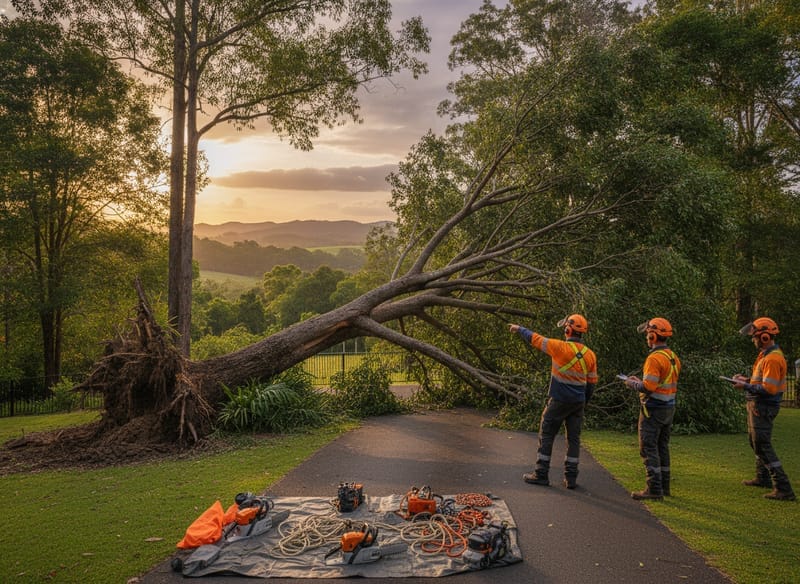
When tropical storms, cyclone remnants, or floodwaters tear through Depot Hill, our storm damage tree removal Depot Hill team mobilises to clear debris, secure damaged canopies, and restore property safety.
Depot Hill is frequently hit hard by tropical weather, most recently during ex-Tropical Cyclone Koji in early 2026. Flood-soaked ground combined with violent storm downdrafts causes catastrophic limb tears and whole-tree failures along the river flats. We have the heavy equipment to clear wet, silt-covered yards efficiently.
Transform chaotic storm debris and tangled branches into clean, usable outdoor spaces.
Eliminate broken branches that remain suspended over roofs, clotheslines, and play areas.
Obtain professional reports and receipts that clearly detail the storm cause and remediation work.
We inspect your Depot Hill block to identify all damaged, hung-up, or compromised trees.
We photograph the damage, outline the clearing scope, and provide an insurance-ready quote.
Our team cuts, dismantles, and chips fallen branches and split trees using safe rigging.
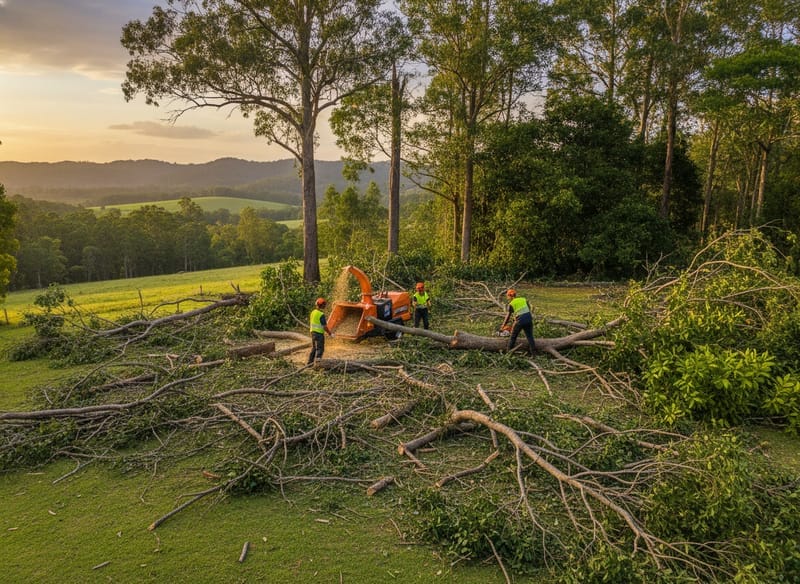
We rake fine debris from your lawn, clear driveways, and remove or deposit mulch as requested.
When severe weather strikes the Fitzroy flood plain, the aftermath can be devastating for local properties. If you are dealing with fallen timber, hung-up branches, or uprooted giants, you need immediate, professional Storm Damage Tree Removal Depot Hill. We are a dedicated team of local Rockhampton arborists who understand precisely how our local climate impacts residential landscapes and established acreage blocks. Following the severe weather events and flooding brought by ex-Tropical Cyclone Koji in January 2026, many older suburbs have been left dealing with saturated, waterlogged ground. In Depot Hill, this saturated soil combined with high winds leads to catastrophic root-plate failures in large backyard Mango trees, sprawling Raintrees, and mature Poincianas. Our team is fully equipped to deploy rapidly with our trucks and climbers, secure your property, and safely dismantle hazardous trees before they cause secondary damage to your home, fences, or powerlines.
After a major storm cell sweeps through Rockhampton, the rush to clean up can lead property owners to attempt hazardous DIY clearing. Storm damage tree removal is arguably the most dangerous aspect of arboriculture. Fallen or partially collapsed trees are under extreme, unpredictable tension. A single incorrect chainsaw cut on a windthrown limb can cause the timber to barber-chair or snap violently, leading to severe injury or further property destruction.
Following a flood or cyclone, relying on unqualified operators with a chainsaw and a ute is equally risky. They often lack the required public liability insurance and the technical understanding of dynamic loads. When a heavy Moreton Bay Fig or African Mahogany branch is suspended over a classic Depot Hill Queenslander, it requires precise rigging and load-lowering techniques to remove safely without breaching the roof cavity.
Our experienced climbing arborists approach every emergency site with a structured hazard assessment. We understand how storm-stressed timber behaves. By applying proper dismantling techniques and adhering to the safety principles within AS4373 (Pruning of Amenity Trees) for any canopy we are trying to save, we ensure your property is protected. Whether we are dealing with a shattered trunk or a tree leaning dangerously due to soil liquefaction, our team manages the complex tension and compression forces to bring the timber down safely.
Managing storm-damaged vegetation requires specialised equipment and advanced rigging techniques. Our arborists utilise a range of highly technical methods to safely extract compromised trees from your property.
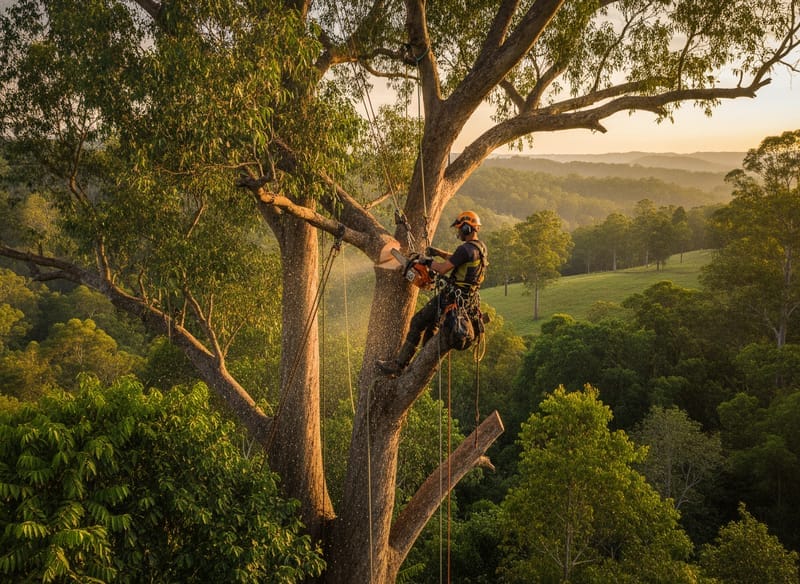
Our first priority is isolating immediate hazards. We secure the site and use advanced rope-access or Elevating Work Platforms (EWPs) to stabilise trees threatening homes or powerlines. We focus on removing fractured, hung-up branches and relieving canopy weight to prevent imminent collapse before commencing full removal.
When a large tree has fallen directly onto a roof or is suspended over fragile infrastructure, standard felling is impossible. Our climbers install specialised rigging lines to take the weight of the timber. For extreme cases, we coordinate loader cranes or HIABs to lift heavy logs vertically out of tight, narrow-access spaces common in older Depot Hill blocks.
Trees that have uprooted entirely often leave a massive, heavy root-plate sitting precariously in waterlogged soil. As the trunk is cut and the weight is removed, these plates can violently snap back into the hole. Our team secures the root-plate with winches and heavy rigging before systematically bucking the trunk to ensure the safety of ground crews.
Storms generate a massive volume of green waste. We utilise high-capacity 12-inch wood chippers and tipper trucks to process all foliage and timber on-site. This clears your property quickly, transforming dangerous debris into manageable mulch while our mini-loaders ensure the yard is left clean and accessible.
When you require Storm Damage Tree Removal Depot Hill, time is critical. Our process is designed to be rapid, safe, and thoroughly documented, ensuring you have everything you need for peace of mind and insurance purposes. Step one is our rapid site triage. Upon arrival at your Depot Hill property, our team assesses the entire yard to categorise the damage. We identify immediate hazards—such as branches suspended over roofs or access paths—versus secondary cleanup tasks like fallen timber on open ground. Step two involves comprehensive documentation. We know that insurance claims demand clear evidence. Before starting any chainsaws, our team photographs the damage, the compromised structures, and the surrounding environment. We provide a detailed quote that breaks down each job line, which you can submit directly to your insurer. Step three is the safe dismantling and extraction. Utilising top-handle climbing saws, pole pruners, and advanced rope techniques, our arborists systematically piece down the damaged timber. We manage the descent of every branch to protect your lawns, pathways, and fencing. Finally, we conduct a thorough site cleanup. Using our mini-loaders and wood chippers, all branches and logs are processed and removed. We leave your property safe, clean, and ready for any necessary repairs or replanting.
Emergency tree work leaves no room for compromised safety. Our operations are fully insured with comprehensive Public Liability and WorkCover, protecting you, your property, and our staff.
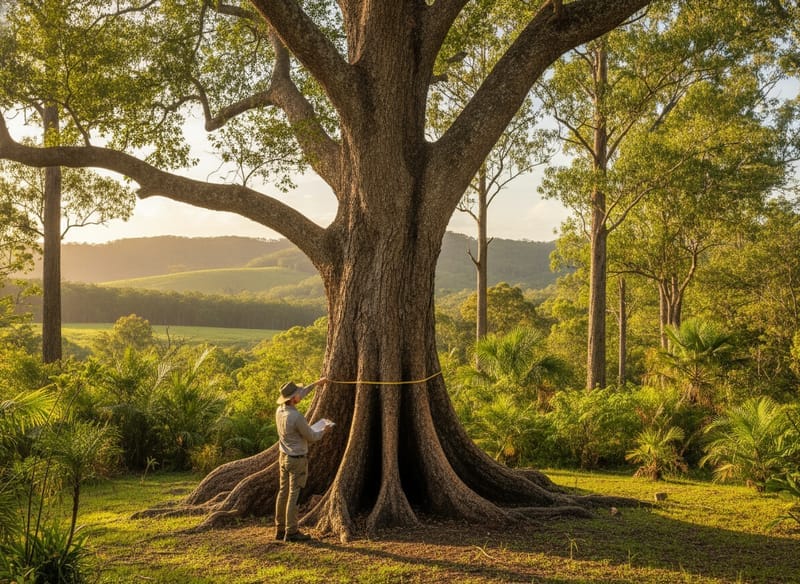
Our field crew consists of fully qualified AQF Level 3 arborists, equipped with up-to-date tickets for Tree Felling, Elevating Work Platform (EWP) operation, and Working at Heights. When assessing storm-damaged canopies that can be saved, we strictly adhere to AS4373 (Pruning of Amenity Trees), performing precise target pruning to remove fractures without resorting to harmful lopping. If your property falls under specific development conditions, our AQF Level 5 consulting arborists can provide the necessary AS4970 risk assessments and reports required by council, ensuring all work complies with the highest industry standards.
Navigating tree removal rules in Rockhampton usually starts with the Rockhampton Regional Council's RockePlan tool, specifically checking for the Biodiversity areas overlay or Heritage place overlays common in older areas. However, post-storm environments operate differently.
Following the severe weather of ex-Tropical Cyclone Koji in January 2026, a state disaster clearing exemption is actively in place until 17 January 2027 for the Rockhampton Disaster District. This allows landholders to perform necessary clearing to prevent loss of life, property damage, or to maintain infrastructure without standard approvals.
For residents in Depot Hill, this means we can legally expedite the removal of hazardous trees—such as waterlogged Mango trees or heavy Poinciana limbs shattered by storm cells—that threaten your classic Queenslander. Note that council trees on the verge remain strictly protected under Local Law 1; if a street tree falls onto your property, we must liaise directly with Council. We handle the crucial step of documenting the hazard prior to removal, keeping a robust written and photographic record to ensure you remain fully compliant with the exemption rules.
Once the immediate hazard of storm damage has been cleared, your remaining trees require close attention. Saturated soils on the Fitzroy flood plain can take weeks to drain fully. Monitor your retained trees for subtle signs of root failure, such as ground cracking or heaving soil around the base, which indicate structural instability. Look out for rapid, weak epicormic growth on damaged branches, as this signals high tree stress. If you notice a sudden lean or newly hung-up deadwood, call our team back for a follow-up assessment. For properties looking to replant lost canopy, we recommend sourcing hardy, locally adapted stock compliant with AS2303, ensuring your new trees are resilient enough to handle Rockhampton's next wet season.
Storm damage cleanup costs vary based on the volume of debris, the presence of hung-up limbs, and site access.
We provide honest, comprehensive quotes tailored to insurance claims or direct property cleanup.
We provide storm damage clearing across Depot Hill and all surrounding flood plain suburbs.
Contact our local arborist team for efficient storm cleanup, hung-up branch removal, and insurance reports.
Request Storm Cleanup